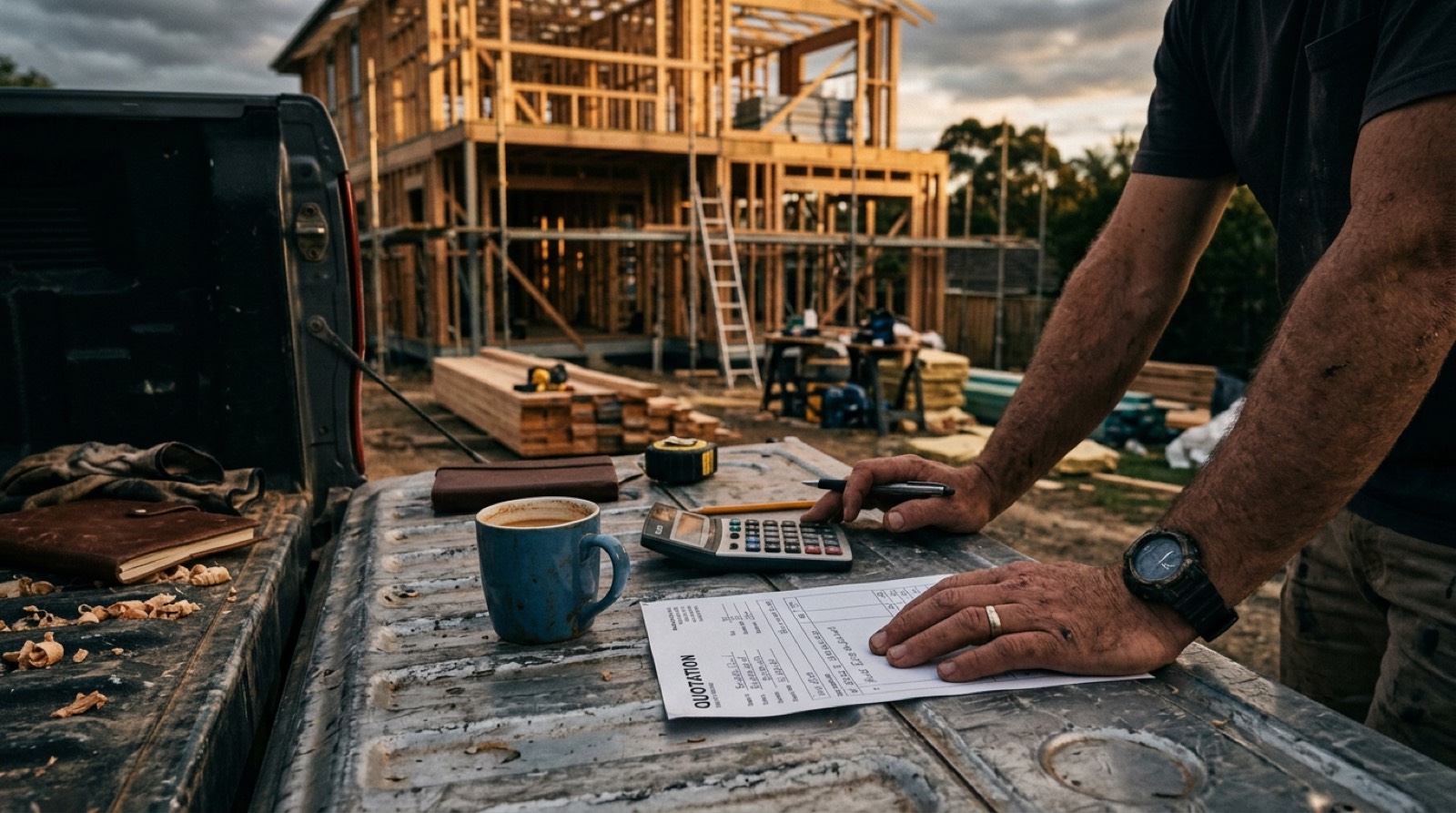
Work in Progress Tracking for Builders: Know If a Job Is Making Money Before It Finishes
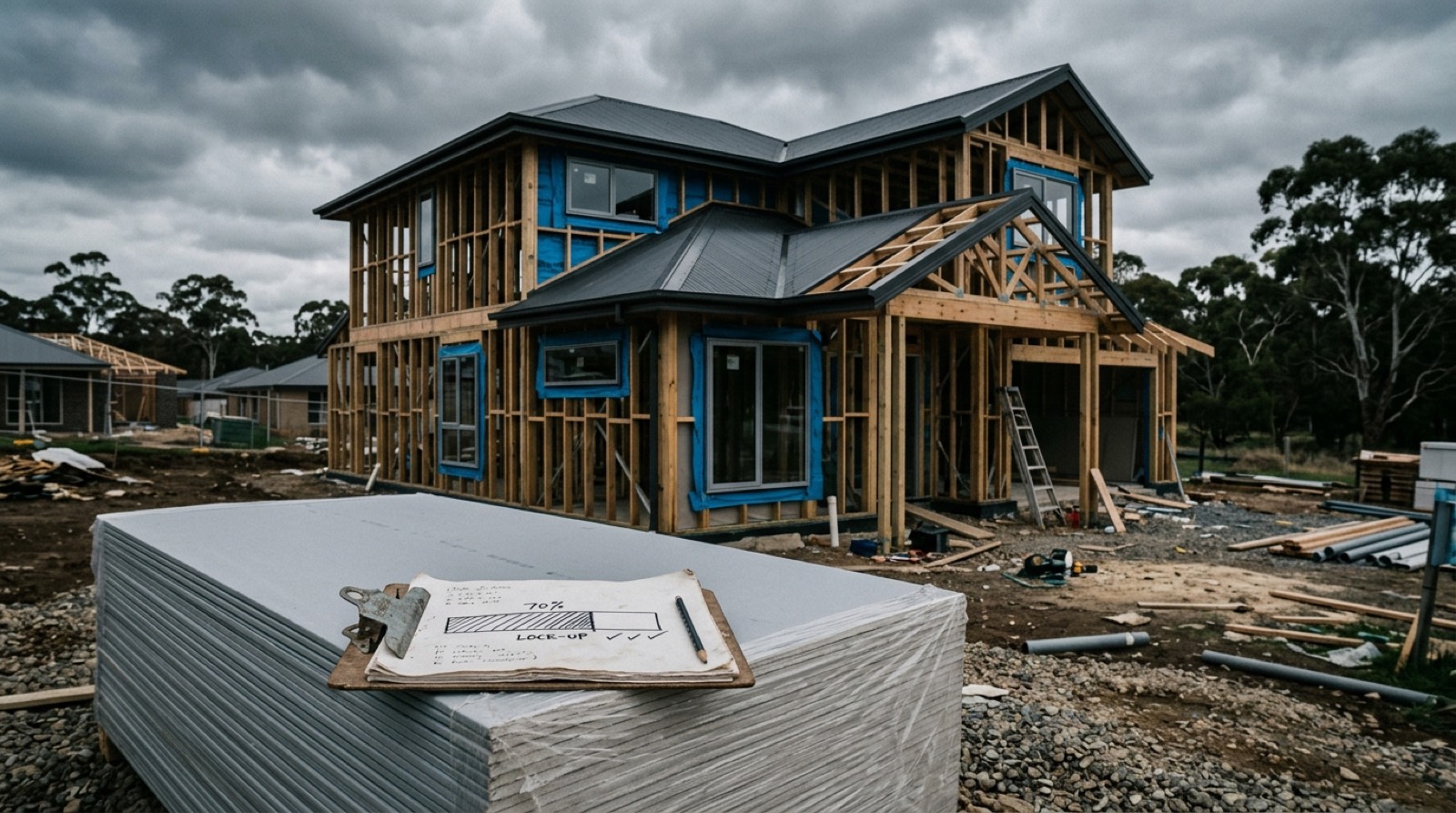
Work in progress tracking for builders means comparing cost to date, value earned and amount billed on every open job, every week. Do that and you know a job is losing money at frame stage, not at handover. Skip it and the job tells you how it went when it is too late to fix.
What is WIP in plain words?
WIP stands for work in progress. It is every job you have started and not finished. A WIP report puts three numbers side by side for each of those jobs.
- Cost to date: materials, subbies, your labour and anything else you have committed to the job, whether or not the invoice has arrived.
- Value earned: the contract price multiplied by how complete the job is. A $300,000 renovation at 50 percent complete has earned $150,000, as an example.
- Billed to date: the progress claims you have actually sent.
Value earned minus cost to date is the margin the job is actually making. Value earned minus billed is whether you are ahead or behind on cash. Two short sums, and most builders never do either until year end.
Why do builders get surprised at the end of a job?
Because the costs arrive after the work does. The slab goes in during week two. The concreter's invoice lands in week six. The electrician's rough-in bill shows up a month after lock-up. The bank account looks healthy at lock-up because the big claims have come in and half the subbie invoices have not. Then the last three invoices arrive together, the final claim is small, and the job that felt profitable comes in $20,000 under what you quoted, as an example.
Having co-owned a construction business, I know the feeling: you never lost money on a single day, you lost it in the gap between doing the work and seeing the bill. WIP closes that gap, for builders and for carpenters or any trade with long jobs.
The three numbers to track every week, per job
Keep it to three, or nobody updates the sheet.
1. Committed cost
Not what has been invoiced. What you have ordered, booked or signed up for. If the plumber has done rough-in and has not billed you, that money is spent. Add it. The ATO wants actual invoices at tax time; for running the job, the committed figure is the honest one.
2. Percentage complete
Walk the site and put a number on it. Use stages if that is easier: slab, frame, lock-up, fit-out, handover, each worth a set share of the contract. A job that "feels" 70 percent done is often 55 percent done with the fiddly work left.
3. Progress claims
What you have claimed, what has been paid, what is overdue. Claims that sit unsent for a fortnight are the biggest cash leak on a small building job.
Over-billing and under-billing: what each one means for cash
Compare billed to date with value earned.
- Over-billed (billed more than earned): you are holding the client's money for work you have not done yet. Cash looks good. It is not yours yet. Spend it on the next job's deposit and you have just borrowed from a job that still has to be finished.
- Under-billed (earned more than billed): you have done work you have not been paid for. Cash looks tight, even on a profitable job. This is the common one. It usually means a claim is late or a variation was never written up.
Here is the caveat a lot of advice skips. A WIP sheet can show every job in profit while the bank account is empty, because profit on paper and cash in the account move at different speeds. If your claims lag the work by three weeks across four jobs, you are funding four jobs out of your own pocket. The sheet tells you that. Reading it is on you.
The variations that never get claimed
Every builder has a story about the extra bathroom window or the changed benchtop that was done, discussed on site, and never invoiced. A few hundred dollars each. Across a year and a dozen jobs, a wage.
Put a line on the WIP sheet for variations: approved, done, claimed. If a variation has been done and not claimed, that is under-billing with a name on it. Chase it this week, not at handover when the goodwill has thinned. The Australian Small Business and Family Enterprise Ombudsman deals with payment disputes for exactly this reason; a written, dated variation is your protection.
A simple weekly WIP sheet for a small builder
One spreadsheet tab, one row per job, these columns:
- Job name and contract value (including approved variations).
- Committed cost to date.
- Percentage complete.
- Value earned (contract value multiplied by percentage complete).
- Billed to date.
- Over or under-billed (value earned minus billed).
- Forecast margin (contract value minus forecast total cost).
- Variations done but not claimed.
Fill it in every Friday, fifteen minutes once it exists. One honest warning: your first few WIP reports will be wrong. The percentage complete is a guess until you have done it a few times, and committed cost will miss an invoice or two. That is fine. A rough WIP on Friday beats a perfect one at year end. This weekly discipline is part of what we build inside Level 2 coaching, alongside budgeting and pricing.
What not to do
Do not wait for your bookkeeper's figures; they are accurate and late. Do not use invoiced cost instead of committed cost; it hides the subbie bill that has not landed. Do not set percentage complete without walking the site. Do not skip a week because things are busy; busy weeks are where the money leaks.
When should you move to job management software?
When the spreadsheet is lying to you, not before. Signs: more than five or six jobs open, supervisors updating percentages from the ute, subbie invoices matched to jobs by memory, or you need committed cost pulled from purchase orders. Then the software pays for itself. Before that, it is a monthly fee for a spreadsheet. business.gov.au has plain guides on record keeping and cash flow if you want the basics in one place.
What does WIP tell you about pricing the next job?
Once you have four or five finished jobs with honest WIP histories, you see the pattern. Fit-out always runs 10 percent over your allowance. Your labour estimate on renovations is consistently light. The margin you quote and the margin you land are different numbers, and now you know by how much.
That gap goes straight into the next quote. It is also the foundation of pricing on gross profit per hour, where you stop guessing a markup and start charging for the hours a job actually consumes. A builder who prices from WIP history quotes with confidence, walks away from jobs that never make money, and stops competing on price with people who do not know their costs. That is the work we do with builders in one-on-one coaching.
What to do this week
In order: open a spreadsheet and set up the eight columns above. Pick your biggest open job and fill in one row, committed cost included. Write down every variation done and not claimed on that job and send the claim. Then block fifteen minutes next Friday to do it again. If you want someone who has run a building company to look at your numbers with you, book a free scale session.
Frequently asked questions
What is a WIP report for a builder?
A WIP report lists every unfinished job with its cost to date, value earned and amount billed. It shows whether each job is tracking to its quoted margin and whether you are over or under-billed on it. Done weekly in a simple spreadsheet, it replaces the year-end surprise with a number you can act on while the job is still running.
How often should a builder update work in progress?
Weekly. A fortnight is too long on a job with subbies turning over fast, and monthly only tells you what already went wrong. Pick a set day, Friday works for most crews, and keep it to fifteen minutes per job. The habit matters more than the precision, especially in the first couple of months.
What does under-billing mean on a building job?
Under-billing means you have done more work than you have claimed for. The job can be profitable on paper while your bank account is short, because you are funding the client's build. It is usually caused by late progress claims or variations that were done and never invoiced. The fix is to send the claim this week.
Why is committed cost better than invoiced cost for WIP?
Committed cost includes work that has been done or ordered but not yet billed, such as a subbie invoice that lands a month after the work. Invoiced cost misses it, so the job looks more profitable than it is until the bill arrives. Using committed cost gives you the honest margin while you can still do something about it.
Do I need job management software to track WIP?
No, not at first. A spreadsheet with one row per job and eight columns is enough for a builder running a handful of jobs. Move to software when you have more than five or six open jobs, supervisors updating from site, or you need purchase orders feeding committed cost automatically. Until then the spreadsheet does the job for free.