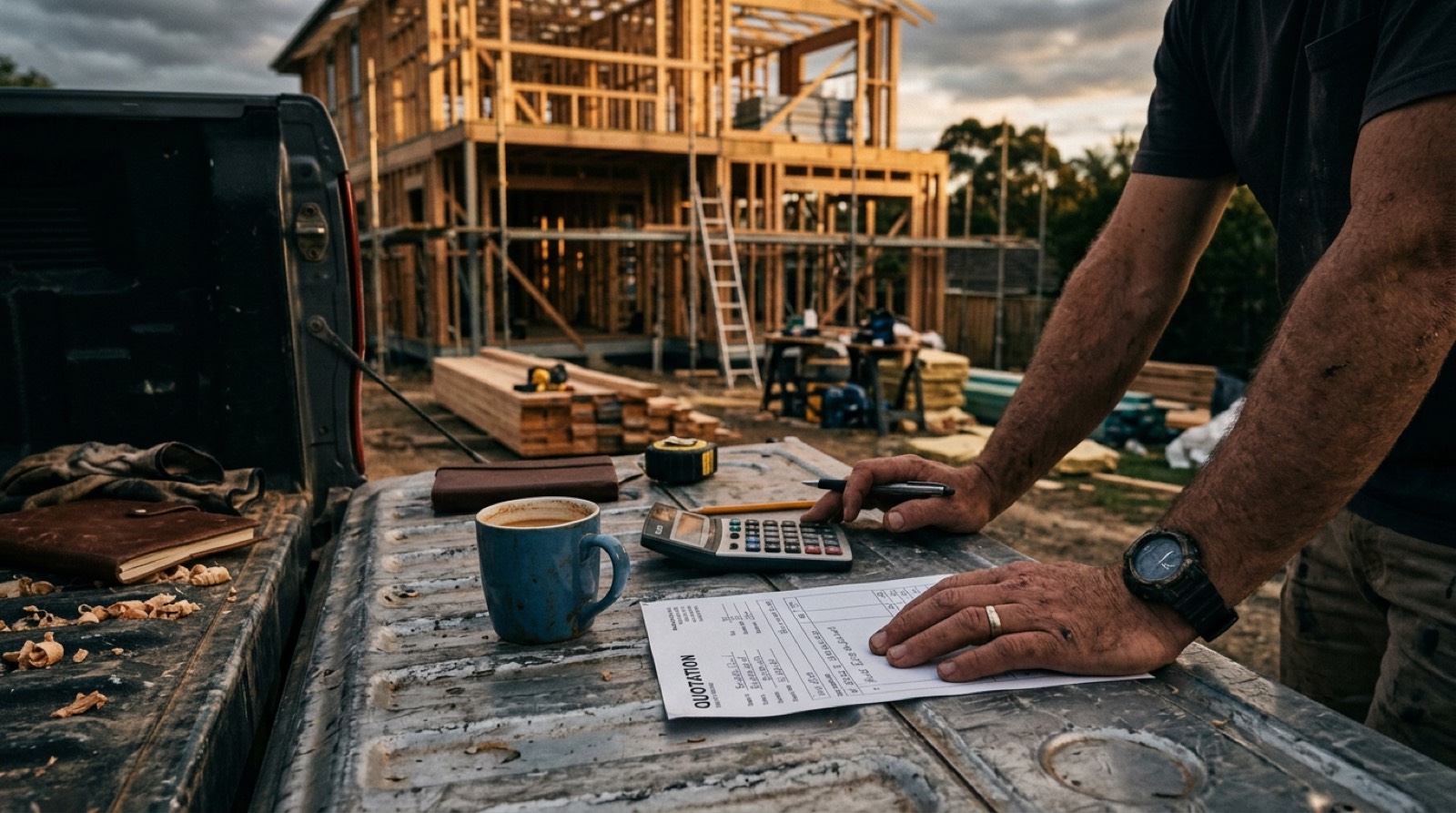
How Much Does a Business Coach for Tradies Cost in Australia?

A business coach for tradies in Australia costs anywhere from a few hundred dollars a month to several thousand, depending on how much access you get and who you actually talk to. That range is a rough guide of what is out there, not a quote. The better question is what the coaching returns, and this guide shows you how to work that out before you spend a dollar.
What does a business coach for tradies cost in Australia?
Every coach is different, and most do not publish prices. Still, the market falls into a few recognisable shapes. Treat these as a rough guide of what is out there and nothing more.
- Group programs: roughly $200 to $800 per month. You join a cohort, watch modules and attend group calls. Cheapest, but the least tailored.
- One-on-one coaching: roughly $500 to $3,000 per month. Regular private calls with one coach who learns your numbers and your trade.
- Masterminds: roughly $1,000 to $5,000 per month, sometimes billed yearly. A small room of owners, often with a coach facilitating, where the value is as much the peers as the program.
- "Done with you" packages: roughly $2,000 to $10,000 for a fixed block of work, where the coach helps build your pricing, systems or hiring process alongside you.
At Tamika Johnston Coaching, a custom coaching plan starts from $100 per month with flexible payment options, and the first session is free. We do not list other prices here because the right plan depends on your business, not on a menu.
What drives the price?
Three things decide what you pay.
Access
Can you message your coach between calls when a quote lands or a staff problem blows up? Or do you wait for the next scheduled slot? Direct access costs more and is usually worth it for a trade business, where decisions happen on site, not in a calendar.
Frequency
Fortnightly calls suit an owner who needs accountability and a plan. Weekly calls suit an owner fixing margins, cash flow and hiring at the same time. More contact means more of the coach's time, so the price goes up.
Who you actually talk to
Some programs sell the founder's name and hand you a junior facilitator. Ask who runs your calls. A coach who has owned a construction business reads a job cost report differently from one who has only read about them.
Is a business coach worth it for a tradie?
The honest answer is: only if the return beats the fee, and that depends on where your business is. Do the maths on one change, not on vague promises of growth.
- One pricing fix. A builder turning over $1.2 million at a 6 percent net margin keeps about $72,000. Lift the margin to 12 percent through better quoting, variations charged properly and labour priced right, and the same work keeps $144,000. That is one fix.
- One hire done right. A good leading hand who frees you from the tools for two days a week gives you around 90 days a year to quote, sell and plan. A bad hire costs wages, rework and your time to replace them.
- One cash flow routine. Progress claims sent on time and chased on time can pull tens of thousands forward and stop the overdraft doing your thinking for you.
If a coach can help you land even one of those, the fee is small by comparison. If they cannot explain which one they would go after first, keep your money. Tamika's free scale session maps the financial strategy and what it would take to add $100,000 to net profit, which is a useful way to test this before signing anything.
When a coach is the wrong spend
Here is a caveat most coaches will not write. If your business has no work coming in, a coach is not your first problem. Spend on getting leads, fixing your Google profile and answering the phone before you spend on coaching.
Some tradies also get more from a good bookkeeper first. If you do not know your true job costs, your BAS is always late, or you are not sure what you owe the ATO, clean numbers will teach you more in a month than any coaching call. A coach works with your numbers; a bookkeeper gives you numbers worth working with.
And do not sign up because the sales call made you feel good. Feeling heard is not a return.
Red flags when choosing a tradie business coach
Coaching is unregulated, so the burden is on you. Walk away from any of these.
- Upfront lock-ins. A 12 month contract paid in advance means the coach gets paid whether or not you get results.
- No guarantee. If a coach is confident in their work, they will stand behind it. If they will not, ask why.
- Never run a trade business. Generic business theory does not survive a wet week, a late supplier and a client who will not pay the variation.
- "Guaranteed 7 figures." Nobody can guarantee your revenue. Anyone who does is selling a feeling.
- Pressure to decide on the call. A real coach is happy for you to sleep on it.
Green flags worth paying for
The good ones look like this. They ask for your numbers before they tell you anything. They have owned a business in your industry, or close to it. They name one or two specific things they would fix first. They offer a guarantee with teeth. And their past clients say so in public, which is why reading Google reviews from other tradies and their partners is worth ten minutes of your time.
Tamika co-owned a construction business before she started coaching them. Both levels run on weekly calls, and the Profit-First Business Coaching level adds the deeper financial work for owners who need to move fast on margins.
How to run a 30 minute first call
Most coaches offer a free first call. Run it like you would a site meeting with a new subbie, so you learn something whether or not you sign.
- Bring three numbers: last year's turnover, your rough net profit and your average job size. If you do not have them, say so. That is useful information too.
- Ask them to pick one thing. "If you had my business for 90 days, what would you fix first?" A good coach answers directly.
- Ask who runs the calls. Get a name.
- Ask about the guarantee. What happens if it does not work?
- Ask what you should do this week for free. If the answer is "sign up and find out", end the call.
Free help is also available from the government. The business.gov.au site has plain-language guides on pricing and cash flow, and the Australian Small Business and Family Enterprise Ombudsman can help if a client will not pay.
What to do this week
Before you call anyone, do two free things. First, open your last 10 invoices and write down the margin on each one. Most owners find at least one job that lost money, and that is the conversation to have with any coach. Second, write down the one decision you keep putting off, whether that is a price rise, a hire or firing a client. A coach is worth the money if they help you make that decision well.
Then, in order: read the reviews, book a free scale session, bring your numbers, and decide afterwards. Book your free scale session or call 0477 440 404.
Frequently asked questions
How much does a business coach for tradies cost per month?
As a rough guide of what is out there, group programs run a few hundred dollars a month, one-on-one coaching runs from around $500 to $3,000 a month, and masterminds can be more. Every coach is different and many do not publish prices. Tamika Johnston Coaching offers custom plans from $100 per month with flexible payment options, and the first scale session is free.
Is a business coach tax deductible for a tradie in Australia?
Coaching that relates to running your existing business is generally claimable as a business expense, but the rules depend on your structure and situation. Check the current guidance on the ATO website or ask your accountant before you rely on the deduction. Keep the invoices and a short note of what the coaching covered.
What is the difference between a business coach and a bookkeeper?
A bookkeeper records and organises your numbers so you know what the business is actually doing. A business coach uses those numbers to help you decide what to change, such as pricing, hiring or cash flow routines. If your books are a mess, a bookkeeper comes first. Once the numbers are clean, a coach helps you act on them.
How long before business coaching pays for itself?
It depends on which problem you fix first. A pricing change can show up on the next quote you send, so some owners see a return within a month or two. Hiring and systems changes take longer, often three to six months. A coach who cannot say what they would fix first, and roughly when you would see it, is a warning sign.
Do I need a coach who has worked in the trades?
It is not essential, but it helps a great deal. A coach who has owned a trade or construction business understands variations, progress claims, weather delays and staff who do not turn up. Tamika co-owned a construction business and works with builders, plumbers, electricians, carpenters, tilers, joiners and the partners who run the business with them.