Quoting and Deposits for Joinery and Cabinet Making Businesses
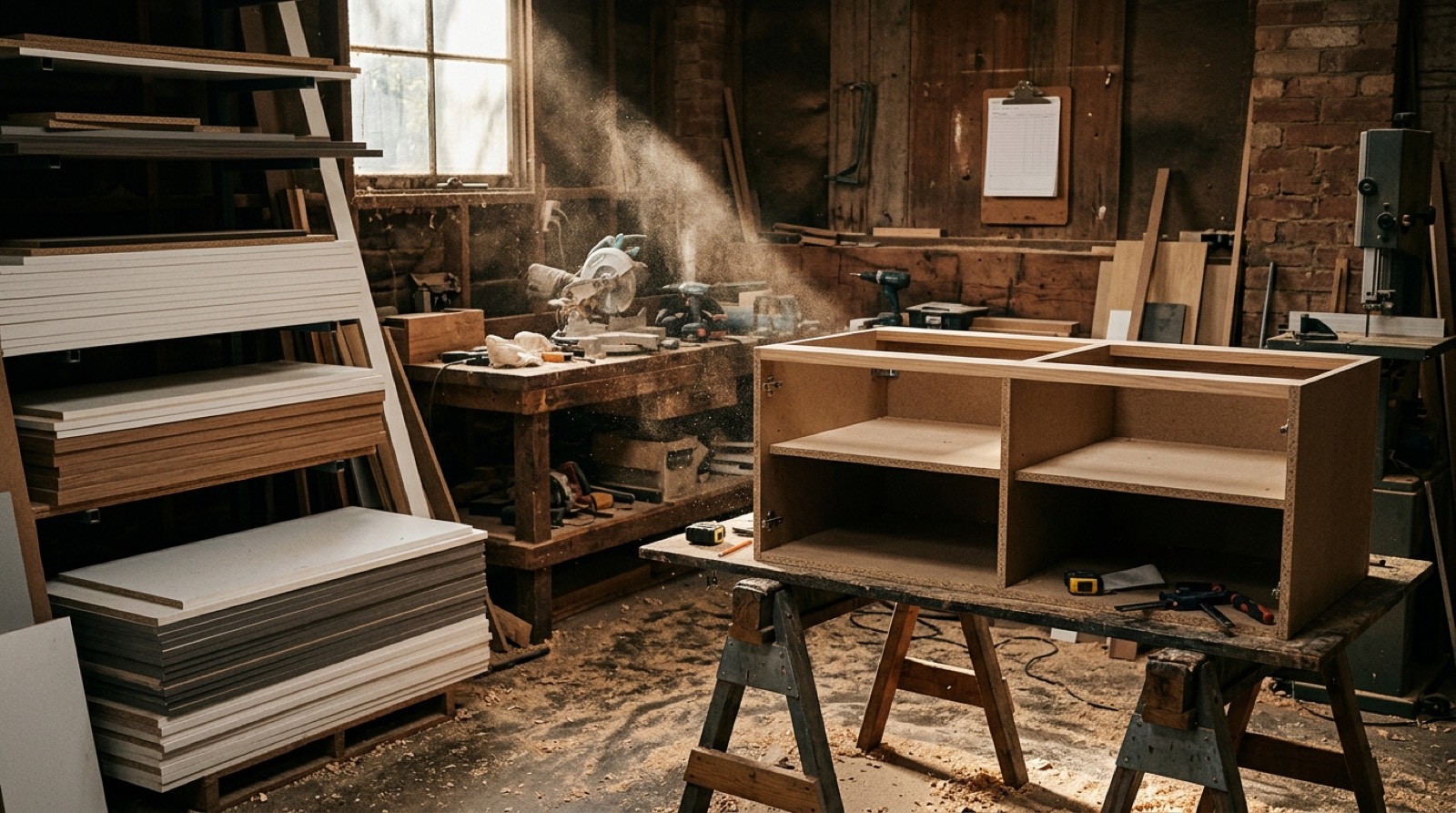
A joinery or cabinet making business stays cash positive by taking a deposit that covers materials, a progress payment at manufacture and the balance before or at install. Most workshop trades do the opposite: they buy board and hardware weeks early, then wait for one payment at the end. That gap is where the business quietly runs out of money.
Why is a joinery business different from a site trade?
A carpenter on site buys timber this week and invoices for this week. A cabinet maker buys board, hinges, runners and a benchtop four to six weeks before anything is installed. The money leaves first, the labour goes in second, and the customer pays third.
That order matters. A workshop can be busy all week and still have an empty bank account, because every job is funded by the business until install day. Three jobs in the shop means three sets of materials and wages carried before a dollar comes back.
Shop time and install time are two different costs
Shop hours and install hours are not the same thing. Shop hours carry the machinery, the factory lease, the power and the consumables. Install hours carry the vehicle, the travel and the risk of a site that is not ready. Split them in your workings, even if the customer only sees one total, or you will never know which bucket is eating the margin.
What is the deposit rule for cabinet making work?
The rule is simple: the deposit must at least cover the materials you will buy for that job. If the board, hardware and benchtop for a kitchen cost $9,000 as an example, a $2,000 deposit means you are lending the customer $7,000 for six weeks, interest free.
A payment schedule that works for a workshop looks like this:
- Deposit on acceptance, large enough to cover materials ordered.
- Progress payment when manufacture is complete and the job is ready for install.
- Balance before or at install, with the keys to the installed job not handed over until it clears.
One caution before you copy that into your next quote. Deposit and progress payment rules for home building work vary by state and by the value of the contract, and some states set limits on what you can ask for up front. Check your state's building authority and read the contract you use before you change your terms. The business.gov.au site is a good starting point for which authority covers you.
How do you word deposits so customers accept them?
Customers accept a deposit when they understand what it pays for. Put it on the quote in plain words, next to the schedule. Something like: "Your deposit covers the board, hardware and benchtop we order for your job. The progress payment is due when your cabinets are built and ready. The balance is due on install."
Three things make the wording land:
- Tie each payment to something the customer can see: materials ordered, cabinets built, cabinets installed.
- State the dates or the trigger, not just the amount.
- Say what happens if a payment is late: the install date moves, because your workshop slots are booked in order.
What you should not do is apologise for the deposit or offer to drop it when someone pushes back. The honest caveat is that a proper deposit will lose you some customers. In our experience, those are the customers who would have paid late or argued over the final invoice anyway. A full order book of slow payers is not the same thing as a profitable business. Working with a coach who understands joinery and cabinet makers often starts with this one conversation.
What about the builder who pays at 45 days?
Builders expect trade terms, and 30 to 45 days is common. You cannot always change their terms, but you can change what you agree to.
Price builder work with the delay built in. If a job sits on their books for 45 days after install, you are funding materials for ten weeks or more. That has a cost, and it belongs in the quote. Ask for a materials deposit on larger jobs, and if they refuse, decide with open eyes whether the margin covers the wait. Builders we work with respect a joiner who sets terms clearly more than one who grumbles about late payment. If a builder is consistently late, the Australian Small Business and Family Enterprise Ombudsman at asbfeo.gov.au has free guidance on payment disputes.
How should you handle variations after drawings are signed?
Signed drawings are your line in the sand. Every change after that point is a variation, priced in writing and accepted before the work changes. A moved power point, a different handle, an extra shelf: small on their own, but they add up to the hours that turn a good job into a break-even one.
A variation process that takes five minutes
Keep a one-page variation form listing the change, extra materials, extra shop and install hours, the new price and the effect on the install date. Send it the same day. Do not start the changed work until it comes back signed. If the customer says "just do it, we'll sort it out later", that is the moment to say no politely and wait for the signature.
Does a full workshop hide a pricing problem?
Yes, and it hides it well. Eight weeks of work booked ahead looks like a healthy business. But if every job is priced too low, a full shop just means you are losing money faster, with more stress.
The test is not how busy you are. It is what each hour in the shop earns. That is the thinking behind the Tradie Lifestyle Pricing Model Tamika teaches, and it is the reason a profit-first approach to coaching looks at the numbers before the order book.
Which three numbers should a cabinet maker know?
If you know nothing else about your business, know these three:
- Shop hours available per week. Not hours worked. Hours you can actually sell, after setup, cleaning, quoting and the days nobody is on the tools.
- Cost per shop hour. Every fixed cost of the workshop (lease, power, machinery, insurance, non-productive wages) divided by those hours. As an example, $12,000 a week of fixed cost over 120 sellable hours is $100 an hour before any material or direct labour.
- Gross profit per hour on the last five jobs. Sale price less materials less direct labour, divided by the hours the job took. If this number sits below your cost per shop hour, the job lost money no matter how good it looked.
Work-in-progress tracking is how you keep these numbers honest while jobs are still in the shop. It shows you which jobs are over their hours before the final invoice does. The ATO's record-keeping guidance at ato.gov.au covers the basics of what you must keep; the three numbers above are what you keep for yourself.
What to do this week
None of this costs money, only an evening.
- Pull your last five completed jobs and work out gross profit per hour on each.
- Add up your weekly fixed costs and divide by your sellable shop hours.
- Rewrite the payment schedule on your quote template: materials deposit, progress at manufacture, balance at install.
- Check your state's building authority rules on deposits for the contracts you use.
- Write a one-page variation form and put it in the ute and the office.
If the numbers surprise you, that is normal. If you want someone who has run a construction business to go through them with you, book a free scale session. It is one-on-one, online anywhere in Australia.
Frequently asked questions
How much deposit should a cabinet maker ask for?
Enough to cover the materials you order for the job, at minimum. Board, hardware and benchtops are paid for weeks before install, so a deposit smaller than that means you are funding the customer. Rules on deposits for home building work differ by state and contract value, so check your state's building authority and the contract you use before setting a figure.
Should shop hours and install hours be priced separately?
Yes, in your workings, even if the customer sees one total. Shop hours carry the lease, machinery, power and consumables. Install hours carry the vehicle, travel and site risk. Pricing them separately shows you which part of a job is losing margin, which a single labour line never can.
What do I do when a builder pays at 45 days?
Price the delay into the job and ask for a materials deposit on larger work. You are funding materials for ten weeks or more on those terms, and that cost belongs in the quote. If the builder refuses any deposit, decide with the numbers in front of you whether the margin covers the wait. Free guidance on payment disputes is available from the Australian Small Business and Family Enterprise Ombudsman.
How do I handle changes after the drawings are signed?
Treat every change as a variation, priced in writing and signed before the work changes. Use a one-page form that lists the change, extra materials, extra shop and install hours, new price and the effect on the install date. Send it the same day. Never start changed work on a verbal "sort it out later".
Is a full workshop a sign the business is profitable?
No. A long lead time only proves that customers accept your prices, and underpriced work gets accepted easily. The real test is gross profit per hour on your recent jobs compared with your cost per shop hour. If the first number sits below the second, a full shop means you are losing money faster, not making more.